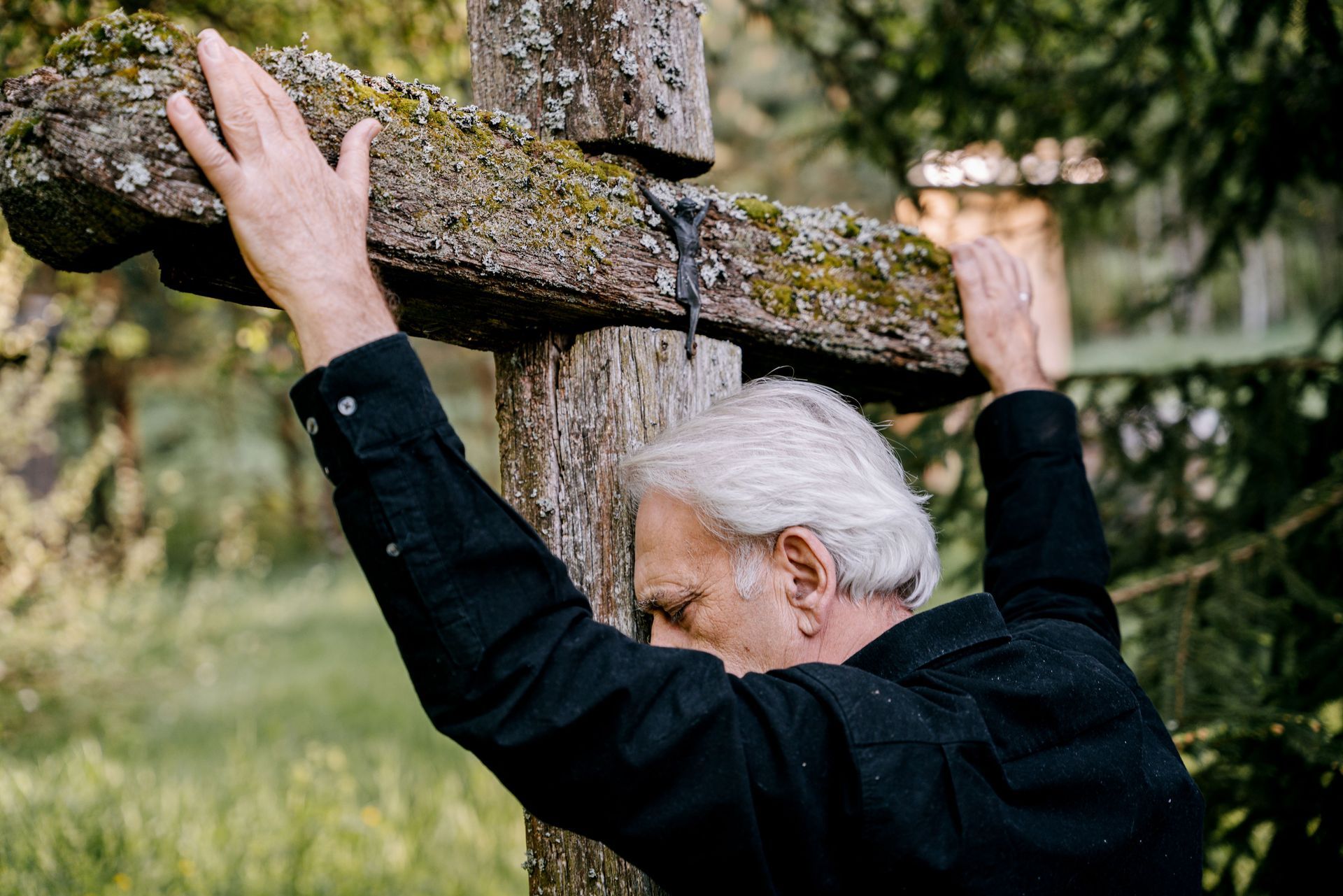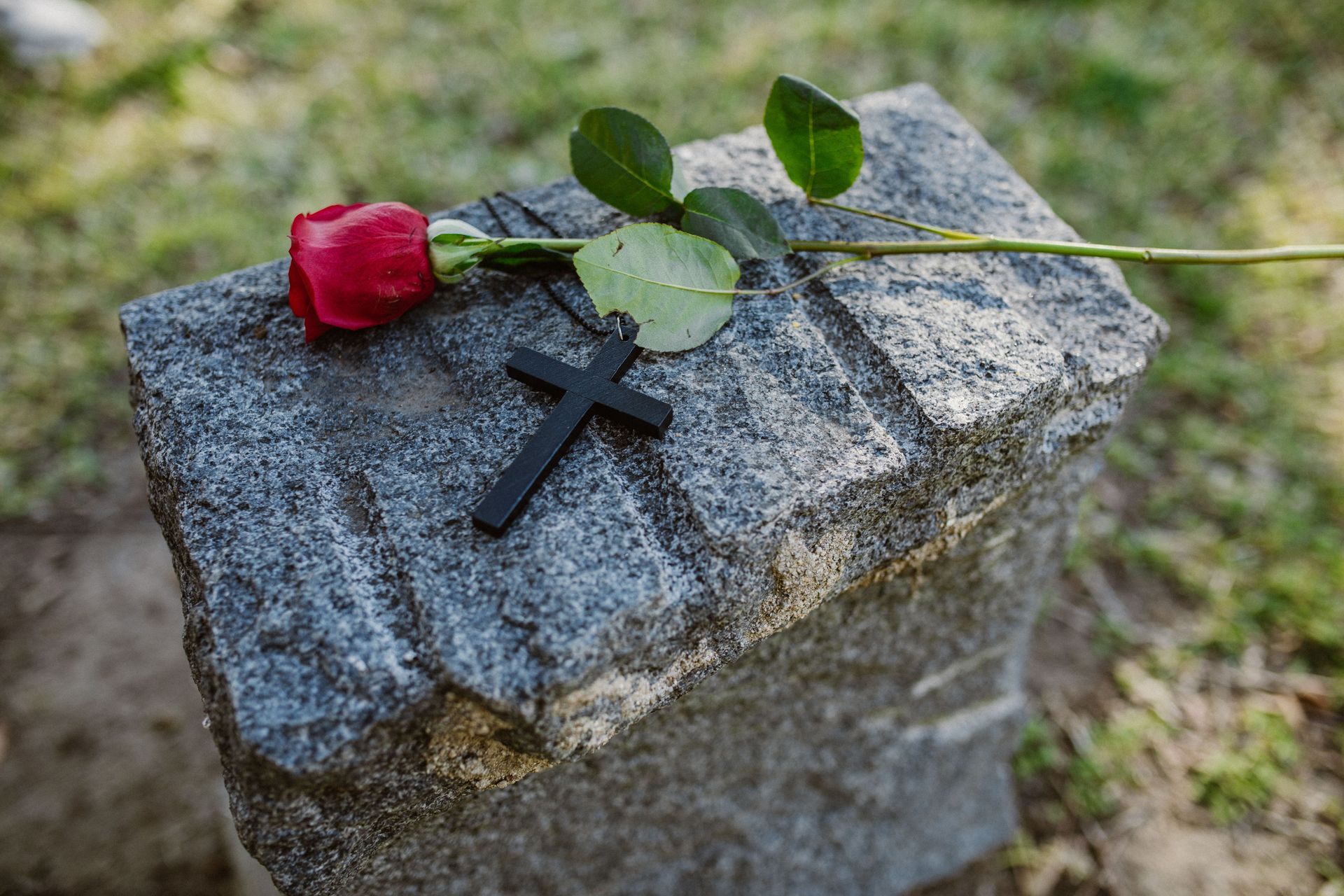
TRAUMA AND HEALING
I recently spoke with a friend who just received a devastating health diagnosis. I was surprised at how calm he was as he told me about it, but he admitted later in the conversation that he hasn’t yet fully processed the crushing ramifications for his and his wife’s future.
I have another friend who, with his wife, several years ago, lost his adult son in a freak accident.
I have a friend in another town whose wife died unexpectedly while on a business trip. While going through her things, grieving, my friend found that she had been committing adultery and was on a tryst with the other man when she died.
Many mothers of servicemen and servicewomen have opened to the knock on their front door only to find two solemn military officers in full uniform standing on the porch, who regretfully inform her that her son or daughter has been killed.
The teenage son of a family that lived near where I grew up, crashed in the street on his longboard (think skateboard, but twice the length), injuring his brain. He can speak and move but has never fully recovered from the injury. He is now in his forties and still lives with his parents, upon whom he relies completely.
Several years ago, I received two devastating calls on the same day. The first, mid-morning, informed me that my mother had died of her dementia before dawn. The second, in early evening, notified me that my father, who was expected to live for another month or two, had died just an hour or two before.
A few months ago, my sister-in-law’s home here in Helena burned. It was a total loss. We have a lady in our senior group who experienced the same destruction.
I found out yesterday that last Sunday (July 19), one of my father’s best friends when I was a child, a man with whom my dad taught elementary school and who served on our church board for many years, and whom I considered closer than some family, finally lost his long and valiant battle with Parkinson’s.
Almost weekly we hear about the destruction of a home or neighborhood and the resulting casualties by some weather event; people whose loved ones are understandably shocked and horrified by their loss.
A young man that my wife and I knew many years ago was fairly recently convicted of shaking his young baby to death. The child’s mother came home to find her baby dead.
I could go on and on, but for the sake of our broken hearts, I’ll stop there. I wouldn’t be a bit surprised if you have experienced something just as terrible as, or even worse than, the events I’ve just described. The death of a loved one, a life-altering or life-threatening diagnosis, the
destruction of property, damage to reputation, physical injury, betrayal by someone close - all of these have the power to shatter us.
What are we to do when such devastation knocks down our door? A cursory search of the internet provided a wealth of conventional secular coping strategies. These include
1) seeking professional help,
2) maintaining your routines,
3) allowing yourself to grieve,
4) accepting the loss,
5) avoiding alcohol and drugs,
6) not suppressing your emotions,
7) finding purpose elsewhere,
8) building a support group,
9) engaging in mindfulness,
10) setting realistic goals for the future,
11) staying connected with those you love and
12) talking about it.
Not a single one of these strategies sounds like a bad idea to me (though I’ve never been sure quite what “mindfulness” is). However, if you are a Believer, someone who has repented of your sins and surrendered your heart and life into the keeping of your Savior, Jesus Christ, who died in your place on the cross, and if you are someone who lives in the hope of eternity in heaven, then you surely see that something is missing.
Where is God in that list of coping strategies? The world leaves Him out of the recovery process! It says, “Rely on yourself and others to get past the trauma.” “You have all the resilience and power that is needed to move on.” They would never say it this way, but how about this old phrase: “Pull yourself up by your own bootstraps!”
But oh, what they’re missing! Who among us has not felt, while praying in times of desperate loss, that tide of inexplicable peace washing over us? Who among us has not felt, when in agony over crushing news, the warmth of God’s love rising within us and the strength of God’s power flowing through us, keeping us from despair? Those who do not walk with God know nothing of His loving care for His children.
In 2008, Christian songwriter Steven Curtis Chapman and his wife Mary Beth, lost one of their little girls in a heartbreaking incident. One of their older sons, arriving home, unintentionally hit the girl with the family SUV. Unimaginable agony for the family. Chapman later wrote a song for his wife called Together and included the following lyrics: “And we’ve crawled on our hands and knees, through valleys cold and dark and deep, sometimes not even sure if we could make it out alive.”
Maybe you’ve been there, too. Maybe you’re there right now. The valley is deep, and you’re not sure where you’ll find the strength to climb up to the heights again. Even lifting your head to look up is difficult. It’s dark, and you can’t see any path ahead that will bring you back up into the light. The darkness is terrifying; it paralyzes you with fear. And it’s so cold. You’re finding it difficult to concentrate because all you can think of is the frost. Warmth is a distant memory.
Worse, your heart is beginning to get numb from the cold. You can no longer feel, and part of you is pleased at that, because allowing yourself to feel just brings back the pain. But the better, wiser part of you knows that only by facing the pain can you get past it.
You and I have had to navigate some pretty deep valleys. I hope your experience, like mine, has shown that “God is our refuge and strength, a very present help in trouble.” (Psalm 46:1)
We are not alone; never for one second on this path are we alone. What a comfort to know that God has promised to “never fail us or forsake us.” (Hebrews 13:5, quoting Deuteronomy 31:6) And David wrote, “Incline Your ear to me, rescue me quickly; be to me a rock of strength,
a stronghold to save me. For You are my rock and my fortress; for Your name’s sake You will lead me and guide me.” Psalm 31:2,3
So when the valley is the coldest, hold tightly to the warming Hand of the One who both created you and died for you.
When your thoughts understandably turn toward the dark of pain and despair, remember God. As much as, at times, you may not want to, cry out to Him for His presence and help. He is the only One who can bring healing. Some of those secular coping strategies are well and good and may provide some relief, but deep, true, lasting healing and health only come from God. He will never turn away from you.
And when the valley of the shadow of death seems to be never-ending and the climb impossible, simply keep moving onward and upward. We’ve all probably been on a hike where at some point we didn’t think we could make it to the top. But we just kept going, maybe slowly and painfully, but eventually we reached the sunlit peak and looked out over the incredible expanse that took our breath away, and we realized that the pain of the climb was worth it.
The climb will be worth it.
For further encouragement, listen to (or better yet, sing) the old hymn “It is Well with My Soul.” And if you have never heard the story of Horatio Spafford, the man who wrote the lyrics, look it up. Knowing the story will bring new meaning and power to the lyrics.
Also, Mercy Me has a fairly new song called, “Make It Well” that I find very encouraging. The first time I heard it, I was okay until the line, “Jesus could You please just sit and cry with me ‘til I can sing ‘It is well with my soul.’” Then it was tissue time!
For more Scripture encouragement, meditate on the following passages:
Mark 4:35-41, Psalm 23, Psalm 28:6-9, Psalm 46, Psalm 121.
Listen to the audio version
About the author:

Recently retired, Brad looks forward to the challenges of a new ministry. He feels that seniors are a vital part of the church Body and though he has only recently crossed the threshold of “senior-dom,” he trusts that God can use Him to help seniors build a stronger relationship with God and stronger relationships with others. The senior years are accompanied by unique challenges, and Brad hopes to be able to come alongside seniors to pass along God’s hope and encouragement.
Brad and his wife Erin began attending Hannaford in November 2019. They have three grown children and two grandchildren (and a third due Spring 2026).
Recent Posts