FEAR
I am going to offer you the opportunity right now to show grace and compassion and mercy to a fellow believer – me.
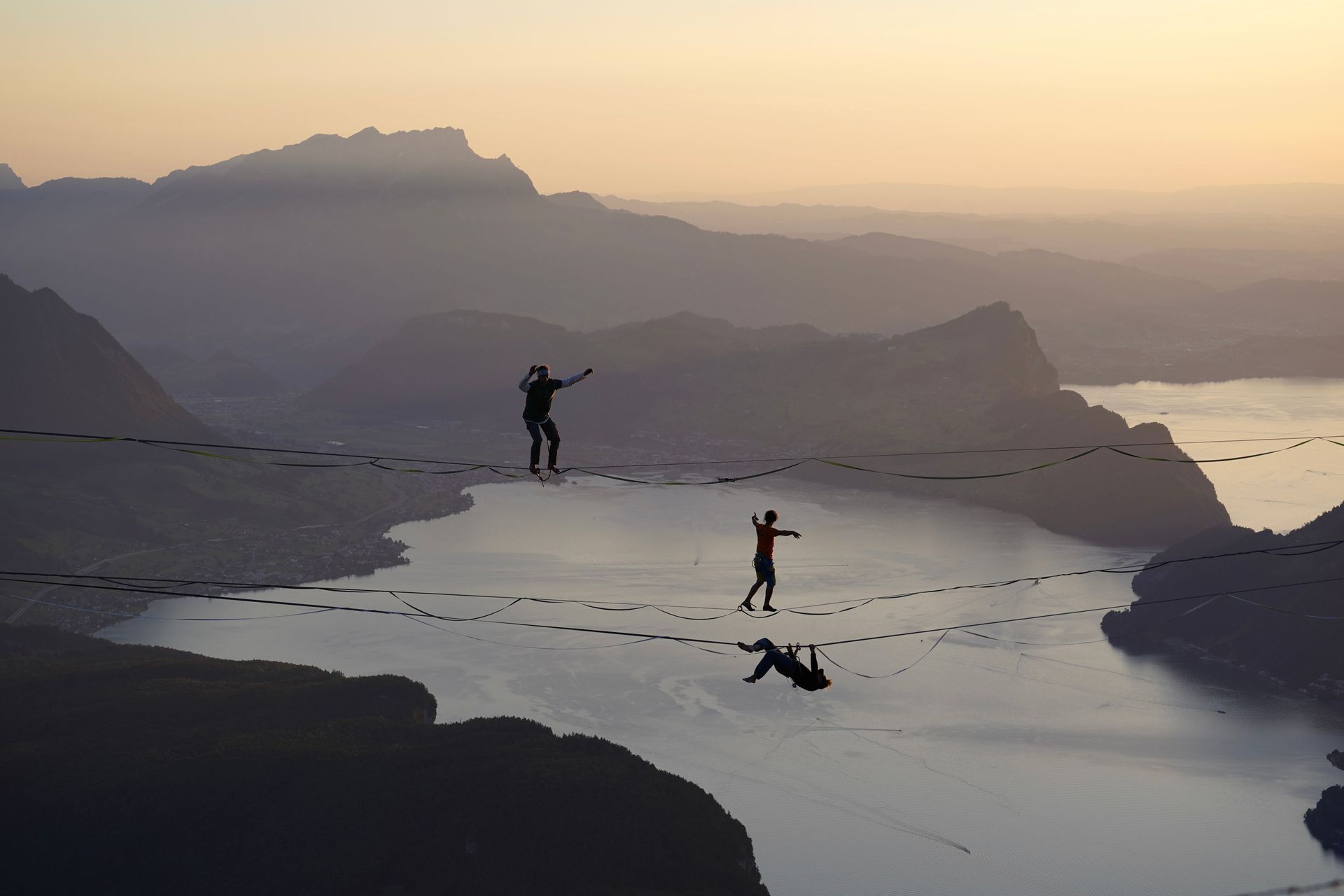
A few weeks ago, at the Thursday morning men’s breakfast, the topic of the devotional was fear. We went around the room and spoke of our greatest fear (a fearful proposition for a bunch of guys, let me tell you). The fear of heights came up several times, dementia was mentioned and one man said his fear was dying a long, agonizing death like his father
did with cancer.
Mine is water. Now, please take a moment to refer back to the first sentence of the devotional! This is your opportunity to refrain from laughter, derision and all statements that sound anything like, “You have got to be kidding!”
And always remember, one man’s fear is another man’s forte. Some are afraid of heights; others make their living there. Some are afraid of public speaking; others thrive on it. Some are afraid of reptiles; others keep them as pets. Some are afraid of needles; to others they are
indispensable tools.
Every couple of years, my wife Erin’s extended family gets together for a family vacation. The grandparents, the parents, the siblings, the cousins, it’s just a big family-fest for a few days. And invariably, it’s a location on water. We’ve rented several different lake houses over the
years – Sand Point, Idaho is always a winner. One year we even rented a mobile houseboat for a week on Lake Roosevelt, in Washington. The young ones spend all day enjoying jumping off the dock (or deck), swimming, waterskiing, tubing, fishing, kayaking, you name it. I do not. I’d much rather spend several days exploring a nice dry canyon somewhere in the Southwest, or enjoying hikes from a cabin somewhere high in the mountains. Anywhere else but a lake or a river or the ocean. But it’s always water!
I don’t like to be in water. I don’t like how it gets in my nose and my eyes and my ears (and refuses to leave). I don’t like the way sound disappears when I go underwater. I don’t like thinking about what could be swimming around down there, looking up at my potentially delicious silhouette. I don’t even like to be on the water, mostly because that’s a great way to end up in the water.
But enough about me. How about you? What is your greatest fear? Clowns? Public speaking? Spiders? Heights? Flying? Snakes? Germs? Needles (that’s called trypanophobia, by the way)? Choking? Dentists? Illness? AI? Small spaces? Large spaces? Lightning? In several articles I have read, the fear of heights is far and away the most common among those polled.
Or maybe your fear is a bit less concrete than those I just mentioned. Maybe it’s the fear of failure? Not measuring up? What other people think of you? Death? Not being enough? Loss? The fear of missing out (FOMO)? Rejection? Abandonment? I didn’t get a clear idea about
which of these is the most common, but many people suffer from these fears.
The greatest fears of the aging population – us – are exactly what you might think. I’m pretty sure we all have experienced, or are right now experiencing, one or more of these: losing our independence, cognitive decline (I think about that one often, as both of my parents died of
complications related to dementia), declining physical health, outliving our financial assets, becoming a burden, being forgotten.
Fear is natural. We’re human, after all. Everyone is afraid of something, right? But it’s not a healthy way to live. We all learned about the fight-or-flight reflex when we were in school; how the body is designed to protect itself either by vacating the area or striking out at the threat, depending on how we perceive the situation. And how, either way, chemicals like adrenaline are released into the bloodstream that heighten awareness and readiness to act. And how, if those chemicals keep getting released into the body long-term, it eventually begins to
wear down. Studies have shown that living in a constant state of fear is harmful.
I’ve always thought about that fight-or-flight reflex as being related only to the fear of heights or snakes or water or small spaces or public speaking; those tangible, right-here-and-right-now, credible-threat-to- my-well-being-in-this-very-moment types of fears. But I think there is also a certain amount of physical damage that happens to us when we are constantly exposed to that last set of fears I mentioned above: declining health, running out of money, losing our independence, becoming a burden, etc. It runs under the radar because it’s not flashy and glamorous like the fear of heights or spiders. These fears are quiet. No one talks much about them (of course, no one really talks much about the flashy ones either, until they’re put on the spot at a Thursday morning men’s breakfast!).
So let’s move away from the “phobia-type” fears like public speaking and water, and focus on the deeper fears common to the aging population; the ones that might cause you to lose sleep more often than you’d like to admit. Every sermon on fear I can remember has stated in
some way that fear is simply a lack of trust in God, and that it comes from trusting too much in the things God has created and not trusting enough in God Himself. That fear is rooted in the belief that God does not have my back; deep down, I don’t believe He will come through on
His promises to me.
That’s not easy for us to hear about ourselves. “Don’t tell me I don’t trust God! Don’t tell me I doubt His goodness and provision.” But join me and let’s really drill down. Do you have any of these fears? “I can’t get around anymore like I used to. How will I function if my condition
gets worse? Maybe I’ll have to go to a “home.” How will I function if I lose my spouse (many of you have come face to face with that one)? I’m afraid of physical suffering and disease. How am I going to live if my income can’t keep up with rising costs? My memory is slipping and
I’m afraid that I’m getting dementia. What if I forget my family? What if I forget Jesus? Will I still go to heaven? The kids and grandkids don’t come around much anymore – maybe they’re going to stop coming altogether, and I’ll be forgotten. I’m not afraid of going to see Jesus, but
I’m afraid of dying.”
The best course of action is always to go to God, to lay your fears at His feet – honestly, with no pretense, no pride, admitting humbly, “God, I’m simply afraid. I know I shouldn’t be. But I am. Please help me. I know You will never leave me alone, even if all the things I’m afraid of
happen. I’ll always have You.” I picture myself often as the father in Mark 9. He came to Jesus because his son was cruelly demon- possessed. He said to Jesus, “If you can do anything, take pity on us and help us!” Jesus replied, “If you [I] can! All things are possible to him who believes.” And I think we can all relate to the statement of the father in response: “I do believe; help my unbelief.” Or in the case of fear, “You tell me not to be afraid, Lord, so I’m not going to fear…(a five-second pause)…Help my fear, Lord!”
God’s Word, we know, also has a lot to say about fear and our response to it. When I was trying to simply survive every day as I walked through my divorce almost thirty years ago, Isaiah 41:10 made a big impact on me: “So do not fear, for I am with you; do not be dismayed, for I am your God. I will strengthen you and help you; I will uphold you with my righteous right hand.” The thought of being upheld by the hand of God has always been extremely comforting to me.
Matthew 10:29-31 is very encouraging, too. “Are not two sparrows sold for a penny? Yet not one of them will fall to the ground outside your Father’s care. And even the very hairs of your head are all numbered. So don’t be afraid; you are worth more than many sparrows.” And how about the one almost everyone has heard of, II Timothy 1:7: “For God has not given us a spirit of fear, but of power and of love and of a sound mind.”
Finally, Joshua 1:9, a verse we can all take comfort in. “Have I not commanded you? Be strong and of good courage; do not be afraid, nor be dismayed, for the LORD your God is with you wherever you go.”
John Piper, retired pastor and author, wrote an article titled Not Dead Yet: Fighting Nine Fears of Old Age. It’s dated March 16, 2023 and you can access it on the Desiring God webpage. This was his closing, very appropriate paragraph: “Therefore, trust Christ. That’s the issue in this room right now. Do you trust Christ and his purchase of all these promises? Do you trust his word? Trust his promises of ever-arriving future grace. He’ll always be there. Be glad in him. Be freed by this gladness for service, not self. Glorify him by your gladness in him and your service to others. And let’s pray for each other. We’re going to help each other die well, right? And to live well till then.”
How about Isaiah 41:10 one more time? “So do not fear, for I am with you; do not be dismayed, for I am your God. I will strengthen you and help you; I will uphold you with my righteous right hand.”
Fear not.
Listen to the audio version
About the author:
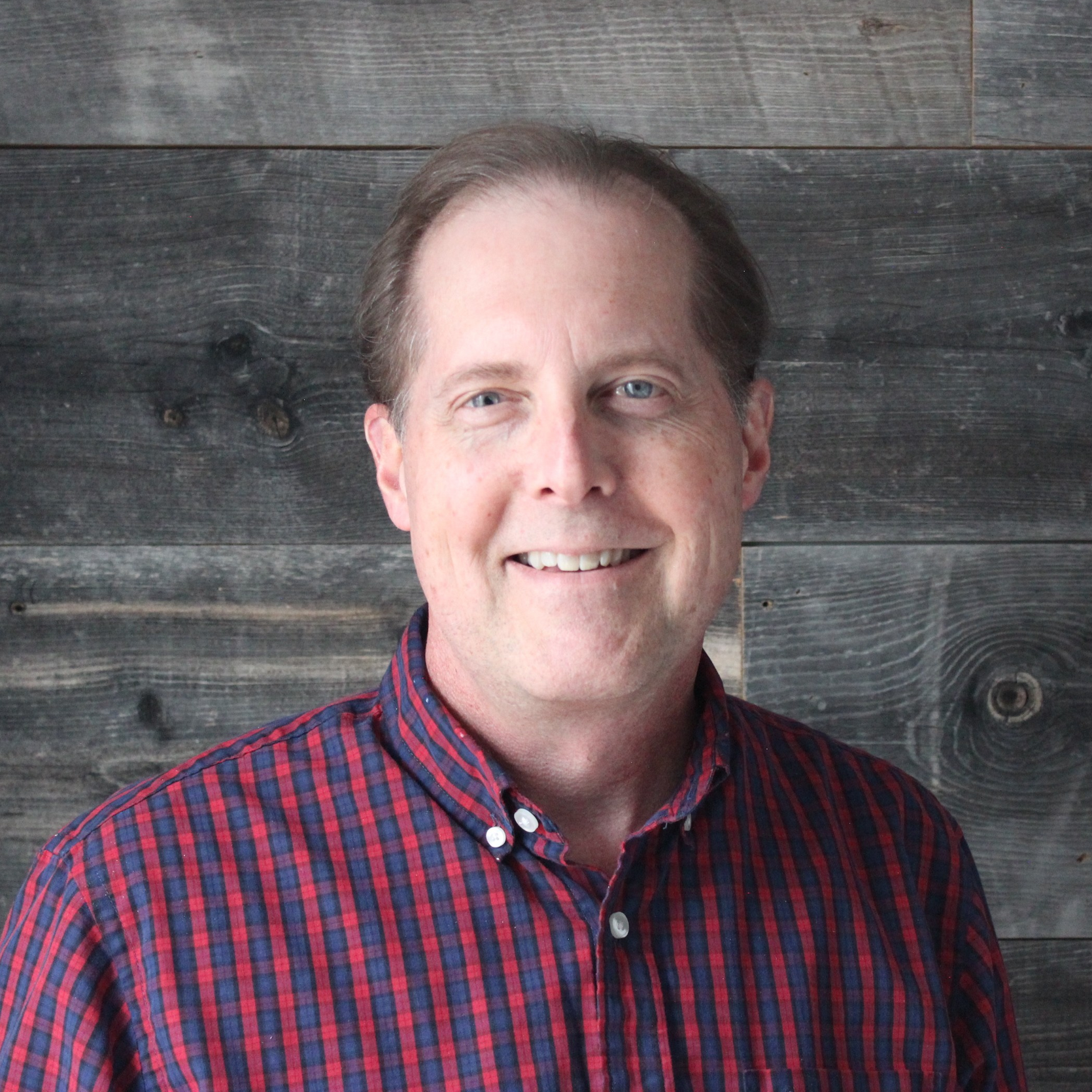
Recently retired, Brad looks forward to the challenges of a new ministry. He feels that seniors are a vital part of the church Body and though he has only recently crossed the threshold of “senior-dom,” he trusts that God can use Him to help seniors build a stronger relationship with God and stronger relationships with others. The senior years are accompanied by unique challenges, and Brad hopes to be able to come alongside seniors to pass along God’s hope and encouragement.
Brad and his wife Erin began attending Hannaford in November 2019. They have three grown children and two grandchildren (and a third due Spring 2026).
Recent Posts